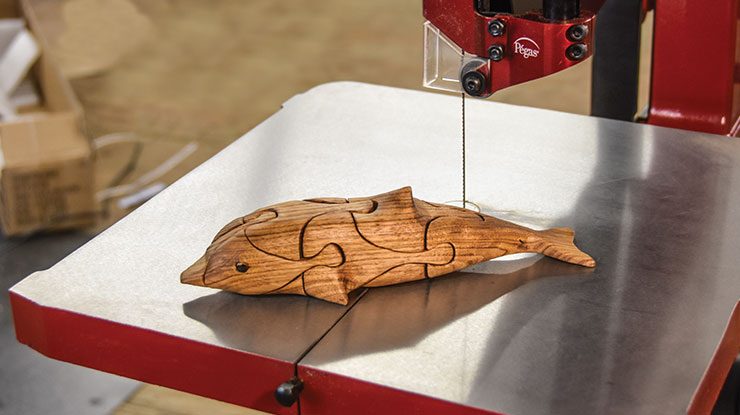
While the two types are very similar in many aspects, there are some key differences which make them better for certain applications. Scroll saws have a tendency to be used for complex designs, curves, delicate shapes, and other intricate tasks. They differ in their primary characteristics, which are power and fineness. They also feature thin blades for greater maneuverability. Here are some things you should consider when choosing between an band saw or a scrollsaw:
Throat size
There are many important factors to consider when selecting a scroll-saw. The throat size should be considered. The throat length of a scrollsaw is different than that of a bandsaw. The throat size of a scroll saw is the distance between the blade and the vertical part of the support arm. The throat size determines the material you are able to cut. A scrollsaw can be purchased with a neck size of anywhere from twelve to thirty-eight inches. You can choose between a throat length of 28 or 30 inches, depending on how large your material is.
Besides their throat sizes, another consideration is the thickness of the material that they can cut. A bandsaw can cut materials upto one inch thick. A scroll saw can handle materials upto two inches thick. The difference in a bandsaw and a spiral saw lies in their ability to cut different materials. For example, a band saw with a fourteen-inch wheel will have a throat size of 13 inches, while a scroll saw with a 20-inch wheel will have a throat clearance of twenty inches.
Feed rates
There are two types of Feed Rates: Scroll Saw and Band Saw. The Feed Rates of a Scroll Saw will vary depending on the thickness of the blade and type of the board. Band saws are more efficient than Scroll Saws in terms of feed rates. However, their Feed Rates are limited by the Blade Class. You must compare the two types of saws in order to be able to use them both. The Scroll Saw works best for creating curves while Band Saws work better for sharp angles.
A Scroll Saw's Feed Rates play a crucial role in the Cutting Process. The Scroll Saw blade must be sized to the thickness of the wood. You will need to adjust the Feed rates for both the Band Saw or Scroll Saw. Both saws require different Feed Rates. Compare these saws to see the Feed rates for Band Saw or Scroll Saw.
Accuracy
A scroll saw and bandsaw have many key differences. The Band Saw can cut through thick wood, while a Scroll Saw has a narrower blade and can only cut material up to 2 inches thick. Scroll saws can also be used to create furniture with intricate patterns. Scroll Saws are better if accuracy is your priority in woodworking.
Both scroll saws and bandsaws have their pros and cons. Scroll saws are better suited for precise cutting and intricate details, while band saws are popular for ripping. Both types of saws can be used for the same tasks, but one is more versatile than the other. For the most part, the differences between scroll saw and band saw are not that large. They are however very different in terms of accuracy.
A scroll saw vs. a band saw
A scrollsaw is suitable for fine woodworking. A bandsaw is best for heavy-duty projects. There are differences between the two types, including their sizes. The scroll saws tend to be less expensive but the bandsaw is more powerful and produces a larger sound. Both saws need special care and maintenance due to their differences in size and sound.
The material thickness is the most important difference between the two types. A scroll saw can handle materials upto one inch thick while a band saw can handle materials upto two inches. The two types of saws have different throat clearance distances, and one must be supported at either end to cut a long board. A scroll saw is not able to cut very long pieces. A scroll saw can only cut to 30 inches across and to 20 inches long.
Cordless vs. corded
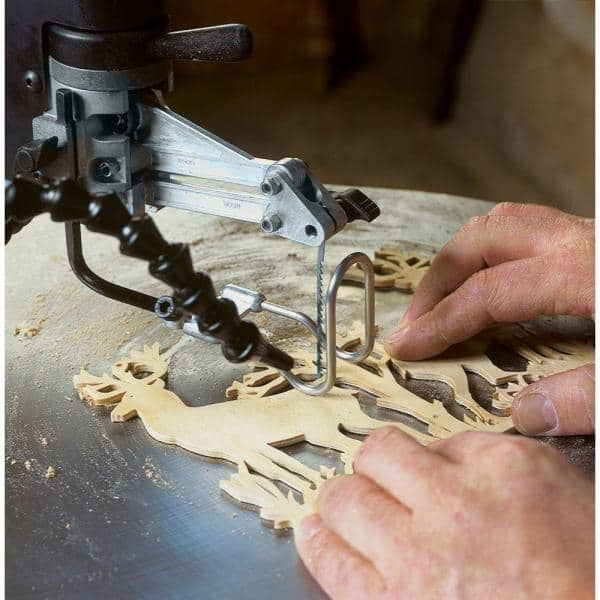
Are you looking for a more efficient saw for your workshop? A cordless scroll-saw may be the best option. This decision is much easier than it seems. Check out these reviews to help you choose the right cordless scroll saw. Then, decide which one is right for you by comparing their price and features.
The difference between a band saw and a scroll saw is not so great when it comes to price. A basic bandsaw will run you less than 100 dollars, while a professional model will run you hundreds. Ask yourself how often you will use your scroll saw before making a purchase. A cheap scroll saw will work fine if you only use it occasionally. If you intend to use it every day, however, you will need to spend more.
FAQ
Is it possible to open my own woodworking shop?
Starting your own woodworking business isn't easy. There are many regulations and legal requirements that you will need to comply with. This doesn't necessarily mean that you should go through all the work of setting up a company. Many people choose to join existing businesses. You will only have to pay membership fees, taxes, and other charges.
Do I have the potential to make a decent living doing this?
Yes! In fact, many woodworkers already do. According to the U.S. Bureau of Labor Statistics, the median annual woodworker wage was $34,000 in May 2012. This is significantly higher than the national average, which is $31,000 per year.
How much should a woodworker charge per hour?
The hourly rate of a professional woodworker depends on many factors including experience, skill level, availability, location, etc.
A skilled woodworker can expect an hourly rate of $20-50.
An hourly rate of $10 for a less skilled woodworker could be possible.
How much do hobbyists need to invest in starting a business?
You will need capital to purchase the tools and supplies you need to start your woodworking business. Start by getting a small circular saw saw, drill press or circular saw. These items won't break the budget and aren't expensive.
Where can I get free woodworking plans?
You don't need to purchase any books or magazines to find free woodworking plans. All you need to do is search Google. Enter "free woodworking", and you will see hundreds upon hundreds of websites offering free plans.
What tools are used by carpenters?
The most common tool used by carpenters is a hammer. A hammer is used for pounding nails into wood. This helps to keep pieces together when they are working on a project. Other tools include clamps, pliers, screwdrivers, measuring tape, pencils, saws, drills, and wrenches.
How long does it take for furniture to be finished?
It depends on which wood you choose, how complicated your design is and what amount of finishing you apply. Hardwoods, for example, require more maintenance than softwoods. Hardwoods are also more expensive than softwoods. But they last longer and resist moisture better. The process of finishing a piece of furniture typically takes anywhere from one week to three months.
Statistics
- The U.S. Bureau of Labor Statistics (BLS) estimates that the number of jobs for woodworkers will decline by 4% between 2019 and 2029. (indeed.com)
- If your lumber isn't as dry as you would like when you purchase it (over 22% in Glen Huey's opinion…probably over 10-15% in my opinion), then it's a good idea to let it acclimate to your workshop for a couple of weeks. (woodandshop.com)
- Overall employment of woodworkers is projected to grow 8 percent from 2020 to 2030, about as fast as the average for all occupations. (bls.gov)
- Woodworkers on the lower end of that spectrum, the bottom 10% to be exact, make roughly $24,000 a year, while the top 10% makes $108,000. (zippia.com)
External Links
How To
How to make wood joint
This tutorial will demonstrate how to join two pieces together of wood. We'll use the "pocket hole joint," which means we drill holes in the wood and then glue them together. If your wood is straight and flat, this method will work well. If your wood isn't straight or flat, you might want to try another method, such as dowel joinery. Here are the steps
-
Drill Pocket Hole Joints. To start, measure and mark where you want to put the pocket hole joint. You will then drill 3/4" deep holes through each piece of wood with a jigsaw, handheld drilling machine, or hand-held drill.
-
Sand Smooth. The wood's edges can be sanded to prevent splitting.
-
Glue together. Apply glue to the sides of both wood. Allow it to cool for at least 5 minutes before you attach the pieces.
-
Fix the Pieces together. After the glue has dried properly, clamp the pieces together to make sure they are flush.
-
Trim Joinery. After the glue dries, trim any excess wood around your joint.
You should leave enough space between the pieces to allow you to turn them inside-out.